GST, TDS & Income Tax: What Does a Small Business Need to File?
18 Aug 2026 · 7 min read

For a small business in India, tax compliance can quickly become confusing.
You may know that you have to deal with GST, income tax and TDS, but the real question is: what exactly does your business need to file, and when?
The answer depends on your business structure, turnover, GST registration, nature of payments and the transactions you undertake.
Tax compliance is not one annual exercise. Different obligations operate at different intervals throughout the year.
This is where the right GST and income tax consultant can help turn multiple tax obligations into a structured compliance process.
The 3 Tax Areas Every Small Business Should Understand
A small business should first evaluate three major areas:
Not every business will have the same obligations. A freelancer, GST-registered trader, LLP and private limited company can have very different compliance requirements.
So the first step is not remembering every deadline.
It is identifying which compliances actually apply to your business.
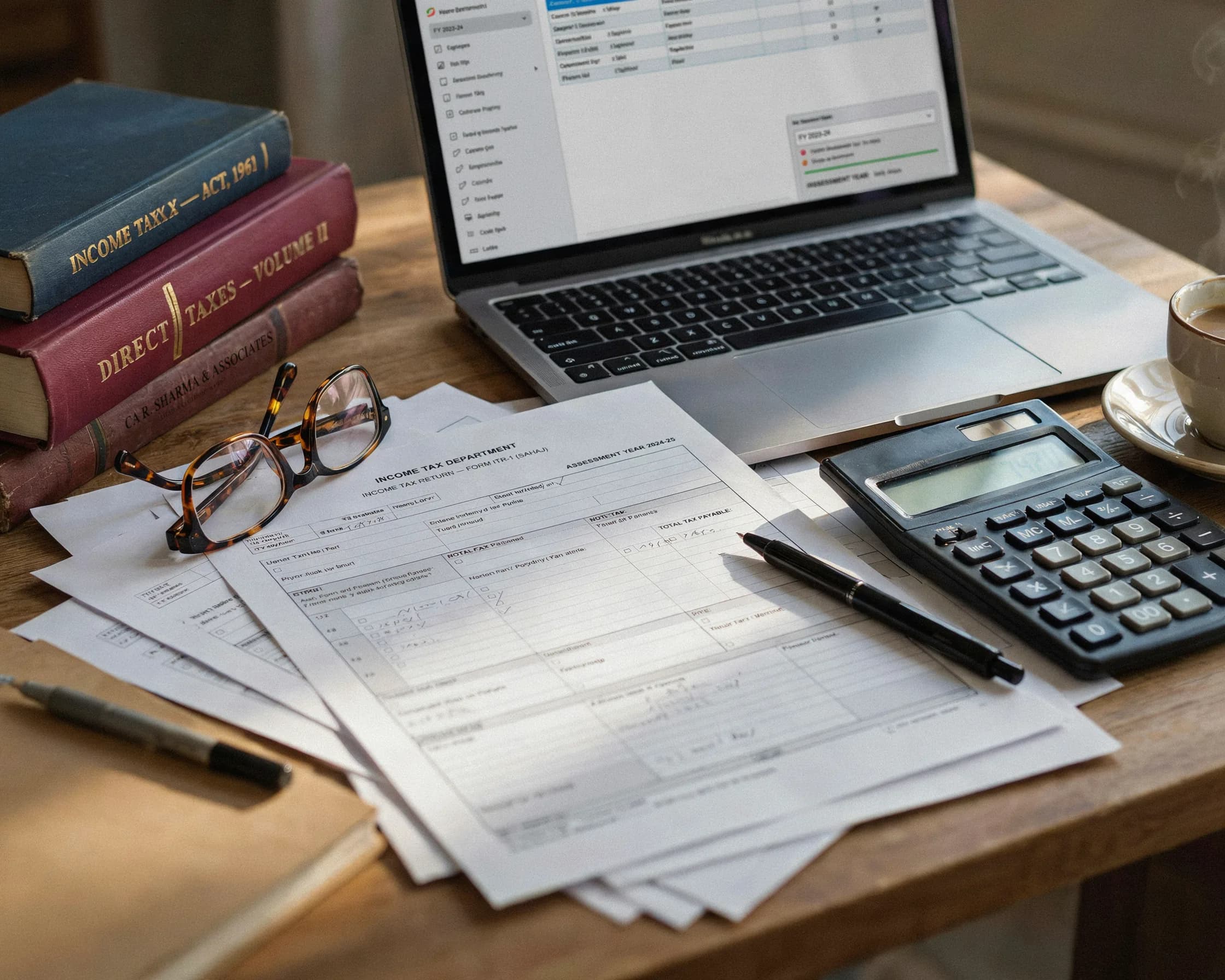
1. Income Tax: Filing ITR Returns
Income tax compliance depends on the legal structure of the business and the applicable provisions.
Depending on the entity, it can involve:
Filing ITR Returns Is More Than Uploading a Form
Before filing ITR returns, the business's financial information needs to be reviewed.
Revenue, business expenses, depreciation, deductions, loans and other relevant transactions can affect taxable income.
That is why proper bookkeeping throughout the year matters.
A clean accounting system makes year-end tax filing easier and reduces inconsistencies between the books and the income tax return.
2026 update: India's income-tax framework has moved to the Income-tax Act, 2025, applicable from 1 April 2026. Businesses should therefore use the applicable forms and provisions for the relevant tax year rather than relying on outdated filing information. The Income Tax Department's portal currently provides ITR utilities for AY 2026-27.
2. GST: What Does a Small Business Need to File?
If a business is registered under GST, it may have recurring compliance requirements such as:
The confusion for many small businesses is not simply whether they have GST.
It is: what do I need to report after I get GST registration?
Filing GST Returns: More Than a Monthly Task
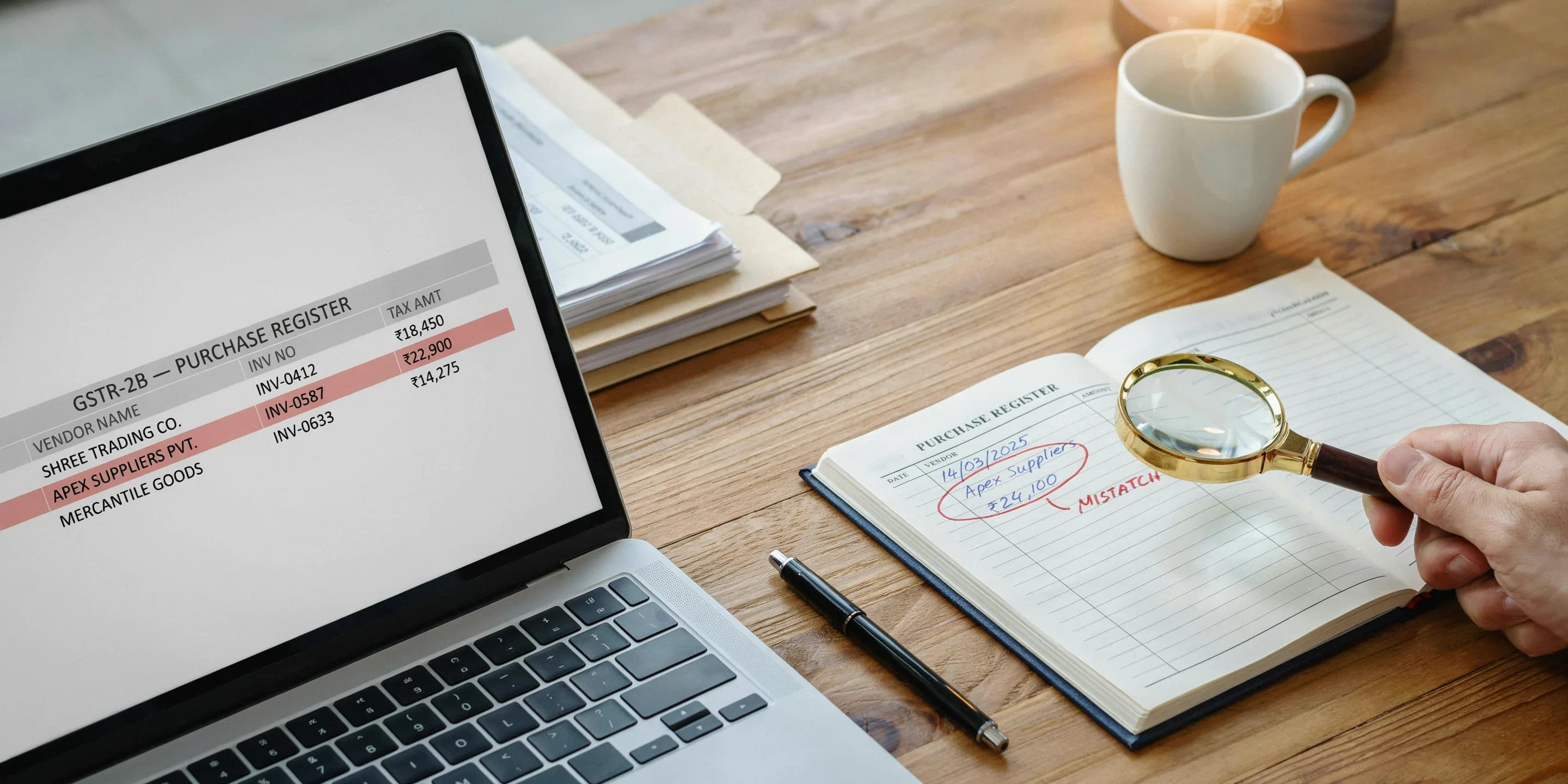
For regular taxpayers, GSTR-1 captures outward-supply information, while GSTR-3B is used to report applicable GST liabilities and eligible input tax credit.
That means the process should look like: Sales invoices, Purchase records, GST data, ITC reconciliation, then GST returns.
A business should not simply upload figures without checking whether the underlying records reconcile.
For eligible taxpayers under the QRMP scheme, GST returns can be filed quarterly. GSTN's current guidance states that quarterly GSTR-1 is generally due on the 13th of the month following the quarter, while GSTR-3B is generally due on the 22nd or 24th, depending on the taxpayer's state or Union Territory.
These dates can be changed through notifications, so businesses should verify the applicable deadline for their registration and tax period before filing.
3. TDS: Does Your Business Need to Deduct Tax?
TDS becomes relevant when a business makes certain specified payments, which may include salary, professional fees, contractor payments, rent, commission, interest and certain payments to non-residents.
TDS compliance is not completed simply by deducting tax.
The process is: Identify, Deduct, Deposit, Report, Issue Certificate, then Reconcile.
Filing TDS Returns on or Before Due Dates
Businesses responsible for TDS also need to focus on filing TDS returns on or before due dates.
Current quarterly TDS statement deadlines are generally:
TDS deducted during a month is generally deposited by the 7th of the following month, while March deductions by non-government deductors are generally due by 30 April.
These dates are subject to the applicable form, provisions and any statutory extensions. Businesses should verify the current deadline before filing.
What About Advance Tax?
A small business should also evaluate whether advance tax provisions apply.
Instead of waiting until year-end, the business estimates its tax liability and pays it progressively during the year.
Regular monitoring of revenue, profitability, expenses and cash flow therefore becomes important.
If profits increase significantly but tax payments are not planned accordingly, the business may face a larger liability later.
A Simple Tax Compliance System for Small Businesses
You do not need to memorise dozens of deadlines.
You need a system.
Step 1: Identify
Determine your business structure, GST registration status, turnover, nature of transactions, TDS applicability and other relevant registrations.
Step 2: Create a Compliance Calendar
Track GST return deadlines, TDS payment and return deadlines, income tax deadlines, advance tax and tax audit where applicable.
Step 3: Reconcile
Regularly match books, bank records, GST, TDS, invoices and tax records.
Step 4: Review Before Filing
Check taxable income, GST liability, eligible ITC, TDS deductions and supporting documents.
Step 5: Maintain Records
Keep acknowledgements, challans, returns, certificates, reconciliations and notices properly documented.
Common Mistakes Small Businesses Make
Why a GST and Income Tax Consultant Can Help
For a small business owner, managing tax compliance alongside daily operations can become difficult.
The role of a GST and income tax consultant should not simply be to file returns.
It should be to help answer: What applies? What is due? What data is required? Has it been reconciled? Has it been filed?
An integrated approach brings taxation, GST, accounting, TDS and related advisory together instead of treating them as disconnected activities.
DSR Governance LLP provides taxation and GST services alongside audit, accounting, financial advisory, corporate compliance and other specialised business services.
Final Takeaway
For a small business in India, tax compliance does not have to be complicated but it does have to be organised.
Income tax, GST and TDS operate on different rules, reporting requirements and timelines.
The right approach is to identify what applies, maintain accurate books, reconcile regularly and ensure ITR returns, GST returns and TDS returns are filed on or before the applicable due dates.
Good tax compliance is not simply about avoiding penalties.
It gives a business cleaner records, better financial visibility and greater confidence while it grows.
Frequently Asked Questions
What tax returns does a small business need to file?
Depending on its structure and activities, common obligations include income tax returns, GST returns and TDS returns.
Does every small business need GST registration?
No. GST registration depends on applicable provisions, turnover, nature of supplies and other conditions.
Does every small business need to deduct TDS?
No. TDS applies when specified payments are covered by the applicable provisions.
How often are GST returns filed?
The frequency depends on the taxpayer and applicable GST scheme. Regular and QRMP taxpayers can have different filing arrangements.
Why use a GST and income tax consultant?
Professional support can help identify applicable obligations, manage recurring filings, reconcile tax data and address compliance issues while the business owner focuses on growth.
Key areas covered:
- Income tax, GST and TDS each have separate filing requirements and timelines
- Not every small business has the same obligations it depends on structure, turnover and transactions
- Filing ITR requires reviewing revenue, expenses, deductions and loans not just uploading a form
- GSTR-1 and GSTR-3B must be reconciled with books before filing
- TDS involves deduction, deposit, return filing and certificate issuance
- Advance tax should be monitored and paid progressively during the year
- A 5-step system covers Identify, Calendar, Reconcile, Review and Maintain Records
- Weak bookkeeping eventually affects GST, TDS and income tax compliance