
Director KYC: What Is It and Why Is It Important for Companies?
7 Oct 2026 · 5 min read
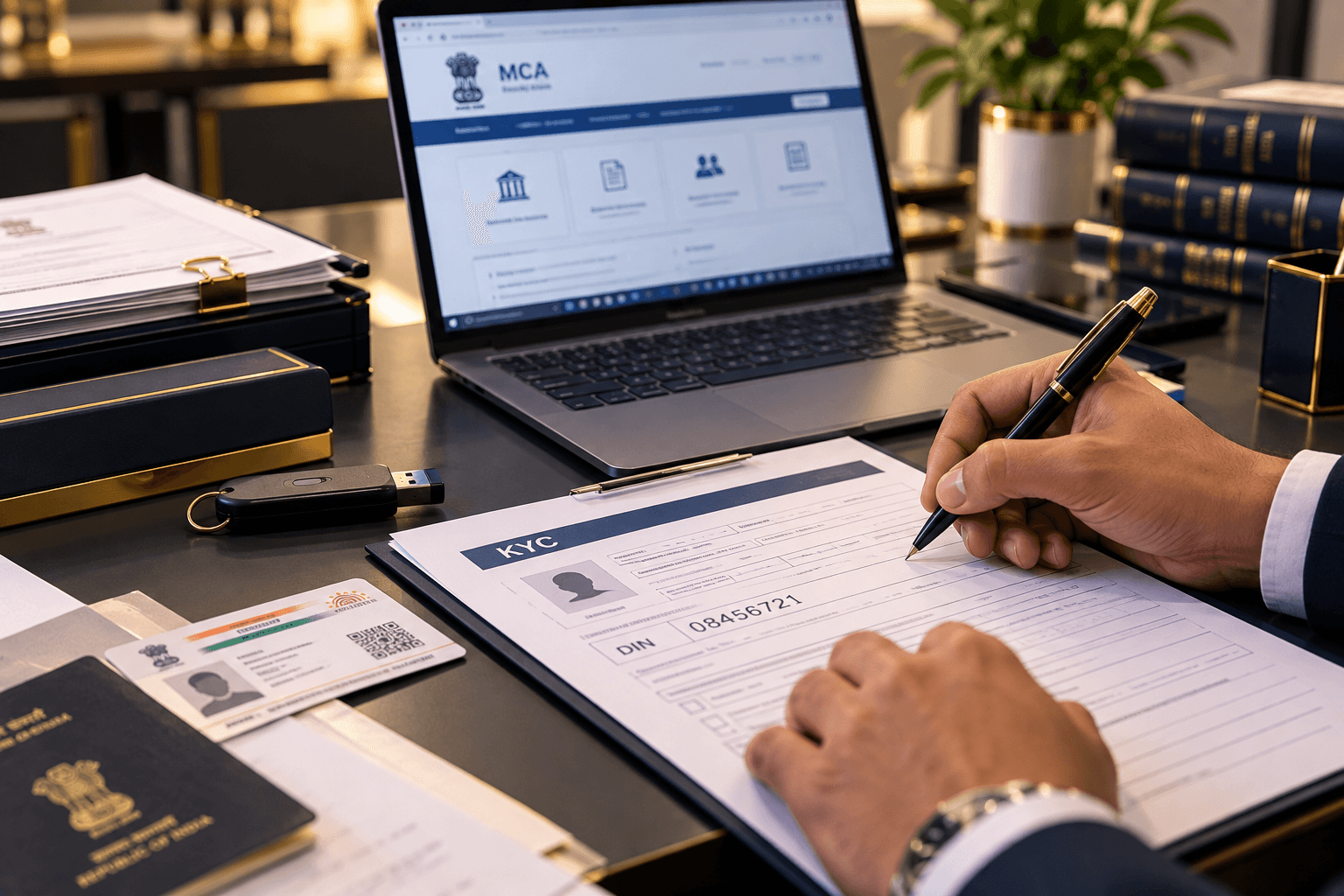
Director KYC is the yearly process of confirming a director's identity and contact details with the Ministry of Corporate Affairs (MCA).
Anyone holding a Director Identification Number (DIN) may need to complete this KYC within the prescribed timeline. For companies, keeping Director KYC up to date is an important part of corporate compliance services because missing it can lead to DIN deactivation and unnecessary compliance problems.
What Is Director KYC?
Director KYC allows the MCA to verify and maintain updated information about DIN holders.
It is generally completed through DIR-3-KYC or the DIR-3-KYC-WEB service.
The information may include:
The mobile number and email address are especially important because they form part of the director's verified information with the MCA.
Who Needs to Complete Director KYC?
The requirement applies to individuals holding a DIN, not only people who are currently serving as directors. This is separate from routine roc annual filing requirements, which apply to companies under the Companies Act.
A DIN holder completing KYC for the first time generally needs to file DIR-3-KYC.
If KYC was completed in a previous year and there are no changes in the information, subsequent annual KYC can generally be completed through DIR-3-KYC-WEB.
However, if the director needs to update their personal mobile number or email address, the DIR-3-KYC form is generally required instead.
For companies managing several directors, keeping track of these requirements is an important part of corporate compliance services.
When Is Director KYC Due?
The standard deadline is 30 September of the immediately following financial year.
For example, KYC for a DIN holder who was required to complete KYC for FY 2025-26 would generally be due by 30 September 2026, subject to any extension or notification issued by the MCA.
It is better not to wait until September. Directors should check their details, DSC and supporting documents well in advance.
What Happens If Director KYC Is Missed?
Missing the required KYC can affect the director's DIN status.
A DIN may show as Deactivated due to non-filing of DIR-3-KYC when the required KYC is not completed within the prescribed period.
A delayed KYC filing also attracts a Rs 5,000 fee.
This is why Director KYC should be treated as a regular compliance requirement rather than something to be handled at the last minute.
Why Is Director KYC Important?
A company's compliance involves much more than its financial statements and roc annual filing.
Director KYC helps ensure that the MCA has current and accurate information about the people managing the company.
Keeping these details updated can be important when dealing with:
An outdated or inactive DIN can create unnecessary complications in these processes.
What Should Directors Check Before Filing?
Before completing KYC, directors should check:
Make sure the information matches the relevant MCA and identity records. Also check that the DSC is valid and properly registered before starting the filing.
How Can Corporate Compliance Services Help?
For companies with multiple directors, remembering every KYC deadline can become difficult.
Professional corporate compliance services can help maintain a compliance calendar, monitor DIN status, verify director information and coordinate filings before the deadline.
This becomes even more useful when Director KYC needs to be managed alongside roc annual filing, Board documentation, statutory registers and other MCA requirements.
Good corporate compliance services are not just about submitting forms. They help keep the company's records accurate and up to date throughout the year.
Final Takeaway
Director KYC is a recurring MCA requirement for DIN holders.
The standard deadline is 30 September of the following financial year, and late compliance can result in a Rs 5,000 fee and DIN deactivation.
The practical approach is simple: Check your details, keep your DSC active, complete KYC before the deadline, then save the filing records.
With proper corporate compliance services, Director KYC can become a routine part of the company's compliance calendar instead of a last-minute task.
Frequently Asked Questions
Is Director KYC mandatory every year?
Yes. DIN holders who are required to complete KYC need to comply annually. If there are no changes to previously submitted details, subsequent KYC may generally be completed through DIR-3-KYC-WEB.
What is the last date for Director KYC?
The standard deadline is generally 30 September of the immediately following financial year.
What happens if DIR-3-KYC is filed late?
A delayed filing attracts a Rs 5,000 fee, and the DIN may show a deactivated status due to non-filing until the required compliance is completed.
Is Director KYC part of ROC annual filing?
No. Director KYC is a separate MCA compliance requirement. However, both can be tracked together through the company's annual corporate compliance services calendar.
Key areas covered:
- Director KYC is an annual MCA requirement for all DIN holders, not just active directors
- First-time filers use DIR-3-KYC; subsequent years with no changes can use DIR-3-KYC-WEB
- The standard deadline is 30 September of the immediately following financial year
- Missing the deadline can result in a Rs 5,000 fee and DIN deactivation
- An inactive DIN can cause complications in ROC filings, board changes, and MCA event-based filings
- Director KYC is separate from ROC annual filing but should be tracked together in a compliance calendar